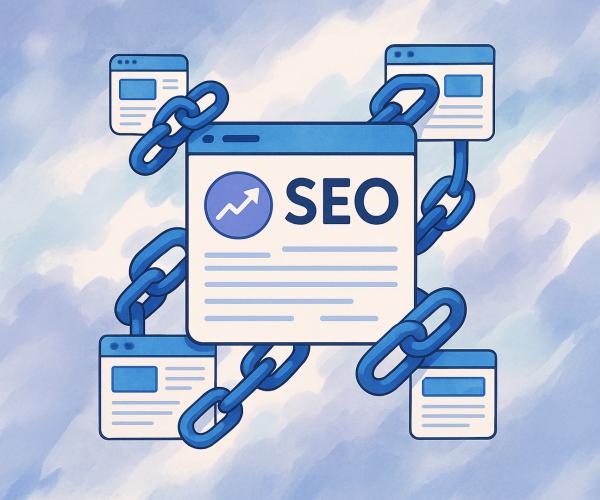
What is a link scheme in SEO and How Does Google Spot It?
A link scheme in SEO refers to any manipulative tactic designed to artificially increase the number and quality of links pointing to a website with the primary goal of manipulating search engine rankings. Google’s algorithms detect link schemes through pattern recognition, analyzing factors like sudden link velocity changes, anchor text distribution, and network-level signals when multiple sites participate in coordinated linking activities.
According to Google for Developers' spam policies, engaging in link schemes can result in algorithmic suppression or manual penalties that significantly harm your site’s ranking in Google search results. Understanding what constitutes a link scheme versus legitimate link building has become essential for maintaining long-term SEO success.
What is a link scheme in SEO (2025 definition)?
When we talk about a link scheme, we're describing any organized effort to create backlinks that exists primarily to manipulate how search engines evaluate your website.
Think of it this way: Google uses links as votes of confidence between websites. A link scheme attempts to fake those votes rather than earn them through genuinely valuable content.
The challenge many website owners face is understanding where the line sits between smart link building and participating in link schemes. Google’s position has evolved considerably since the early days of SEO, and what worked in 2015 often violates Google guidelines today.
A mistake we still see in 2025 is website owners treating all backlinks as equally valuable, without considering whether those links are intended to manipulate PageRank or serve a legitimate editorial purpose.
According to Google Search Central’s link spam policies, a link scheme encompasses several specific practices. Buying or selling links for ranking purposes represents the most straightforward violation.
But the definition extends further to include excessive link exchanges, automated link building through software or services, and large-scale link schemes that create artificial patterns across the web.
What makes these practices manipulative is their intent: they exist to deceive the search algorithm rather than to help users discover relevant, valuable content.
The distinction between a natural link and a manipulative link often comes down to one question: would this link exist if search engines didn’t care about it?
A journalist linking to your research study because it strengthens their article creates genuine value.
Paying someone to place a link in an unrelated blog post, or joining a link circle where everyone agrees to link back to each other, creates no real value beyond attempting to game the system.
In 2025, Google’s algorithms will have become sophisticated enough to recognize intent at scale. The search engine doesn’t just count individual links anymore.
It analyzes the context surrounding those links, the timing of when they appear, the anchor text patterns they follow, and the broader network of sites linking to each other.
This network analysis capability means that even clever attempts to disguise link schemes typically leave detectable footprints.
Why avoiding link schemes matters for ranking in Google search
The consequences of engaging in link schemes have shifted dramatically over the past decade.
Early in SEO history, manipulative tactics often worked before Google caught on.
Today, the opposite holds true: websites participating in link schemes face swift algorithmic devaluation, and recovery can take months or years.
Google’s link spam updates specifically target unnatural links at scale.
When the algorithm identifies that your site has been involved in a link scheme, it doesn’t necessarily remove your site from search results entirely.
Instead, it discounts the value of the spammy links, sometimes applying a broader suppression to your overall link profile.
The practical effect? Your site’s ranking in Google search drops for competitive queries where link value matters most.
Manual actions represent the more severe outcome.
When Google’s human reviewers identify clear violations of spam policies, they can apply manual penalties that impact your entire domain.
Recovery from a manual action requires removing or disavowing the problematic links, then requesting reconsideration.
This process often involves auditing thousands of backlinks, reaching out to webmasters for link removal, and documenting your cleanup efforts.
Many site owners underestimate the time and resources this demands.
Beyond the direct ranking impact, participating in link schemes creates opportunity costs.
Resources spent on buying links, coordinating link exchanges, or managing automated link-building services could instead fund content creation, product development, or genuine marketing that attracts natural links.
Quality link building through valuable content produces compounding returns over time.
Manipulative link schemes require constant maintenance to replace devalued links, creating an expensive treadmill that ultimately damages your brand reputation within your industry.
Consider how journalists, bloggers, and industry experts view link spam.
When they encounter sites that clearly engage in black hat SEO practices, they become less likely to link to those sites naturally.
Your participation in obvious link schemes signals to potential linking partners that your site prioritizes manipulation over quality.
This reputation damage extends beyond SEO to affect partnership opportunities, media coverage, and customer trust.
Types of link schemes and how Google detects manipulative tactics
Understanding the specific types of link schemes helps you recognize when an SEO service or strategy crosses from legitimate to manipulative.
Let’s examine the most common link scheme patterns and explore how Google’s algorithms spot them.
1. Paid links and link rentals that violate Google guidelines
Buying or selling links remains one of the clearest violations of Google’s spam policies.
The search engine’s position is unambiguous: any exchange of money, products, or services for links that pass ranking credit constitutes link spam unless those links carry the rel="sponsored" attribute (Google for Developers, Link Spam policies, 2025).
This category includes more than just obvious paid placements. Niche edits, where you pay to insert links into existing content on someone else’s site, fall under the same policy.
Monthly link rental schemes that promise ongoing placements in exchange for recurring fees represent another link scheme variant that Google actively targets.
Even when services market these arrangements as “PR” or “partnerships,” the fundamental nature doesn’t change: if compensation drives the link, it requires proper attribution with rel="sponsored".
Google’s detection capabilities for paid links have evolved to recognize network-level patterns.
When multiple sites participate in the same paid link schemes, they create footprints the algorithm can identify.
Sudden link velocity changes, concentrated anchor text distribution, and temporal clustering of when links appear all signal coordinated paid placement rather than organic editorial linking.
The search engine can correlate these patterns across thousands of sites simultaneously, identifying entire networks of sites that don’t legitimately relate to each other but share suspicious linking patterns.
Compliance path (safe side):
- Mark all compensated links with rel="sponsored".
- Disclose that the link is sponsored.
- Choose placements that have value even without SEO.
Hiding the commercial nature of a link violates both Google guidelines and often consumer protection regulations.
2. Exchange networks and reciprocal linking patterns
Link exchanges represent one of the oldest forms of black hat SEO tactics, yet they persist in 2025 because they seem logical at surface level.
The thinking goes: if we both link to each other, we both benefit.
The problem emerges when this becomes systematic rather than occasional and natural.
Google explicitly identifies excessive link exchanges and partner pages exclusively for cross-linking as link spam (Google for Developers, Link Schemes documentation, 2025).
The threshold for “excessive” typically surfaces when more than 20–30% of your backlink profile consists of reciprocal links, or when you participate in regular swap agreements.
The algorithm detects these patterns through temporal analysis (noting when links appear simultaneously in both directions) and through network analysis that identifies clusters of sites linking to each other in coordinated ways.
Three-way and four-way exchange networks attempt to disguise reciprocal linking by adding intermediary sites.
Site A links to Site B, which links to Site C, which links back to Site A, creating a triangle.
Some practitioners believed this approach would circumvent detection, but Google’s network analysis capabilities easily identify these arrangements as part of a link scheme.
The footprints become obvious when examining link velocity across the participating sites, overlapping anchor text patterns, and minimal topical relevance between the linked sites.
Link circles (private SEO groups, “link clubs”) make this even clearer: when dozens of sites interlink with similar timing and anchors, the pattern is no longer natural.
Safer alternative: co-created assets, partnership content, case studies, industry reports — where links are byproducts, not the goal.
3. Mass guest posting and automated link building
The era of mass guest posting for link building has effectively ended.
Google specifically calls out “articles, guest posts, or press releases distributed on other sites” with optimized anchor text as link spam (Google Search Central, Link spam policies, 2025).
This targeting focuses on scale: the occasional high-quality guest post remains acceptable, but marketplaces selling “10 guest posts for $500” or bundles promising “50 high DA backlinks” create footprints that trigger algorithmic suppression.
These schemes fail because they generate predictable patterns that Google’s algorithms recognize:
- Similar author bios across many sites
- Identical pitch/opening patterns
- Clusters of links in a short window
- Thin content that adds no unique insight
Low-quality directory submissions are in the same basket. Submitting to hundreds of generic directories produces links that Google ignores or treats as spam signals.
A small number of industry or local directories are fine — but mass submission is not a link-earning strategy anymore.
Safer path for 2025: write for sites your audience already reads, add links only where they help the reader, and keep the cadence low (1–2 strong guest posts/month).
FAQ: Link schemes, exchanges, and safe link building
What is a link scheme?
Any link mainly created to manipulate rankings (paid links without rel="sponsored", large link swaps, automated links, irrelevant placements).
Are all reciprocal links bad?
No. Occasional, relevant ones are normal. Patterned/excessive ones look manipulative.
Can I use rel="nofollow" for paid links?
Google says: for compensated links, use rel="sponsored" (clearer + transparent).
How does Google detect them?
Through sudden spikes, repeated/keyword anchors, link networks, and low-quality sites that only exist for links.
Is guest posting dead?
No — mass guest posting is. Selective, value-first guest posting is fine.
What if I did this before?
Stop → audit → remove what you can → disavow the rest → start earning links.